





Source: EN – Geneva Solutions — Read the original article.
UN staff representatives say visa refusals are rising as contracts become shorter and less secure. But French immigration lawyers point instead to tougher migration controls and a visa system that is poorly adapted to non-EU workers and their families.
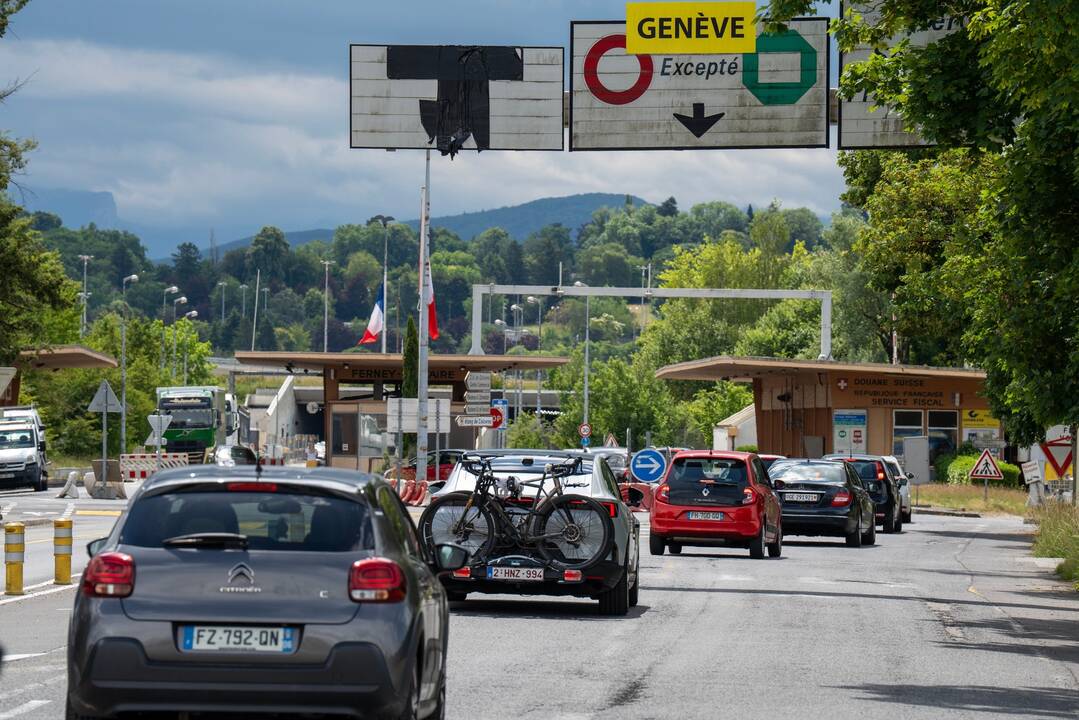
“All four applications were refused.” That was the experience of a British family whose hopes to move from Geneva to the Pays de Gex were dampened by the French administration. As is common in the sector, the plan was for the main breadwinner, a UN agency employee holding a Swiss legitimation card, to commute across the French border. The testimony appeared last June on Glocals, a public forum popular with Geneva’s international community.
It echoes concerns raised by the United Nations Office at Geneva Staff Union, which warned in a 31 August statement of “recent visa issues for staff living in France”. “The uptick in refusals of visa requests appears to be linked to the increased precarity and decreased duration of contracts,” wrote the union’s executive secretary, Laura Johnson, and vice president Janet Puhalovic.
In 2025, 41.8 per cent of international Geneva’s 26,729 international servants resided in France, according to cantonal figures. The wave of aid cuts that has swept over Geneva in the last year has led to job cuts, especially amid more stable, longer-term positions. In response, agencies are increasingly resorting to shorter and more precarious contracts.
Speaking over the phone to Geneva Solutions, union president Ian Richards explains that the number of reported cases has been rising since the beginning of the year, noting that “the Swiss have to accept everyone with a UN contract but France has no obligation to do so”.
Jobs turned down over Swiss living costs
A Geneva-based HR professional, who prefers to remain anonymous to protect her organisation’s image, describes a similar chilling effect on recruitment. She says the difficulties are affecting both short- and longer-term contracts, with short-term contracts facing more hurdles. As a result, some non-EU candidates are choosing to settle in Switzerland, despite the higher cost of living, while others – particularly families relying on a single income – have turned down positions altogether due to the uncertainty surrounding residence in France.
The organisation now advises candidates to consider settling in Switzerland first and securing their Swiss status before attempting to move across the border. It has also updated its guidance, warning candidates of Switzerland’s high cost of living early in the recruitment process.
Another consequence, according to the HR professional, is greater reliance on local recruitment, especially for lower-paid positions. For some candidates coming from abroad, the salary is simply not high enough to make relocating a family to Switzerland financially viable if living in neighbouring France is no longer a realistic option.
Geneva cantonal authorities stress that employees wishing to settle across the border remain subject to French immigration rules. Dejan Nikolic, a spokesperson for the canton’s Department of Finance, Human Resources and External Affairs, notes that Cern staff are an exception, benefiting from a specific agreement with France that grants them a special residence permit.
Immigration under scrutiny
When contacted, France’s consulate general, and embassy in Bern as well as the Swiss permanent mission to the UN in Geneva, which represents the country as host state for international organisations, all declined to comment.
With no official explanation given, immigration lawyers instead point to the way French authorities are applying existing rules.
Jean-Marie de Poulpiquet, a French lawyer based in Annecy, says he has approximately 10 international clients working for international organisations, NGOs or corporations currently facing visa challenges – a “higher than usual” number he blames on “a general stricter application of the rules that has consequences for everyone”.
“There has been an increase in checks and scrutiny in certain types of cases that affect everyone, including people coming through legal and financially secure immigration channels,” he adds, noting that these cases concern a minority and that consular authorities do not devote a great deal of attention to them.
One minor error nearly cost one of his clients her visa. “She clicked on the wrong category while filling out her online application and ended up being refused because of it,” he says, explaining that she had applied for a proffessional visa instead of a visitor visa, which was the appropriate category. Following a months-long appeal, the client was finally allowed to reside in France.
Finances matter
Most of the people Poulpiquet assists in such situations are non-EU nationals or their spouses. EU citizens do not require a residence permit to live in France, while financial security remains a key criterion for authorities, according to the lawyer. “For a visitor residence permit, applicants have to demonstrate sufficient resources,” he says. “The people I assist often have savings. If someone has €20,000 or €30,000 set aside, for example, that obviously helps demonstrate that they have sufficient means.”
The visitor visa is, in a sense, “an enhanced long-stay tourist visa”, Poulpiquet adds. “Even when things move quickly, the process can take four to six months. In other cases, it can take up to two years. In the meantime, provisional authorisations can be issued.”
Philippe Metral, another Annecy-based lawyer, says that “these refusals can be explained by the way residence is assessed, namely by looking at where the applicant’s main centre of economic interests lies.”
He adds: “In the case of foreign nationals working in Switzerland, the administration considers that their main centre of economic interests is located in Switzerland.” But he doesn’t see that as a fatality and notes that refusals under that argument can be challenged.
Without figures from the French authorities, it’s impossible to measure the full scale of the problem. One thing is certain: having a job in Geneva no longer guarantees being able to live just a few kilometres away across the French border.

